
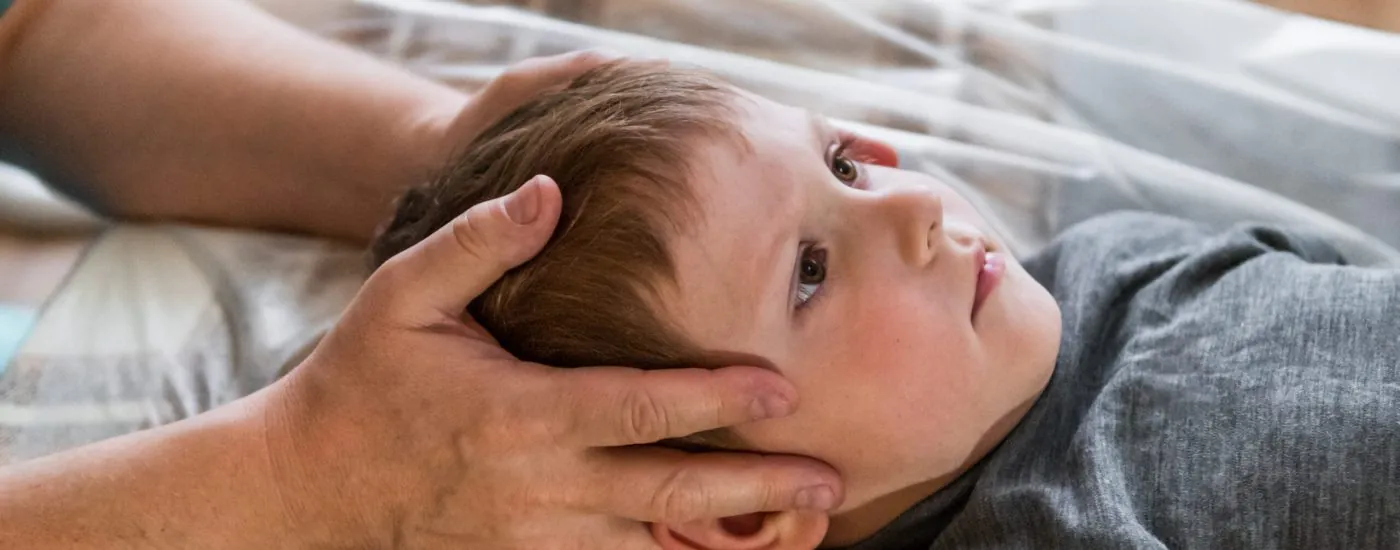
When people talk about osteopatia infantil (infant osteopathy), it’s completely normal that, as a mum or dad, you feel as many doubts as hopes. On one hand, you want to help your baby be more comfortable; on the other, you don’t want to do anything you’re not 100% sure about.
Between polarised opinions on the internet, recommendations from other families and the feeling of accumulated tiredness, it’s easy to feel a bit lost.
You might be here because your baby always turns their head to the same side, because you’ve noticed a flatter area on one side of their head, because colic and crying are overwhelming you, or because you’ve been sleeping badly for months.
The paediatrician has told you that, in principle, everything is within normal limits, but your day-to-day life is still hard and you’re wondering whether osteopatia infantil can add something more.
The aim of this article is not to sell you magic solutions, but to calmly explain what infant osteopathy is – and what it isn’t – in which cases it may make sense, when the paediatrician should go first, how to choose a professional and what realistic expectations you can have if you decide to book an assessment at Fisio Physio Clinic Salinas.
What is infant osteopathy?
When we talk about infant osteopathy, we are not talking about “cracking bones” or doing abrupt manipulations. Paediatric osteopathy is a very gentle, hands-on approach that aims to assess and, when possible, improve your baby’s mobility and comfort: how their neck, spine, rib cage and abdomen move, how they respond to touch and to changes of position.
It’s important to be clear from the start:
- Osteopatia infantil does not replace the paediatrician, regular check-ups, vaccines or medical tests.
- It is not designed to “cure serious illnesses”, but to accompany certain functional situations: tension, asymmetries, digestive discomfort, difficulty in some positions…
In session, a professional trained in osteopatia infantil uses their hands in a very delicate way, with light pressure and small movements, always observing how the baby responds.
The goal is to help the body find more comfortable positions, improve mobility in some areas and, at the same time, give the family practical guidance for day-to-day life.
When does it make sense to consider infant osteopathy for your baby?
Every baby is different and not all of them need treatment. Still, there are some situations that we see very often in families who ask about osteopatia infantil.
Neck tension and a baby who always looks to the same side
It’s quite common for parents to say things like: “They always look to the right, it’s hard for them to turn to the left”, or “they’re fine in the pram, but when I try to put them on this side, they complain”.
Sometimes this is related to neck tension or a small asymmetry in mobility: it’s not that the baby “doesn’t want to”, it’s that that direction simply feels more uncomfortable.
Here, infant osteopathy can assess how the neck moves, how the tissues around it are, and, if appropriate, work gently to improve comfort and range of movement. The paediatrician is always kept in the loop if there is any doubt.
Plagiocephaly and worries about head shape
Another very common concern is noticing that one side of the baby’s head looks flatter (plagiocephaly). In many cases it’s mild or moderate and the paediatrician has already reassured you, but you’re worried it might get worse or leave a visible “mark”.
In these situations, osteopatia infantil can help to:
- Improve neck mobility so the baby can more easily look both ways.
- Support you with posture strategies and tummy time adapted to your reality.
- Make it easier and more comfortable to vary positions throughout the day.
We always insist that plagiocephaly must be monitored by the paediatrician and, when needed, by other specialists. Infant osteopathy can be one piece of the puzzle, never the only one.
Digestive discomfort, colic and intense crying
Maybe what is wearing you down the most are colic, gas and crying after feeds. A baby who curls up, arches their back, turns red, struggles to pass gas and seems to “never find a position”.
In some cases, working gently on the abdomen, diaphragm and tense areas, and reviewing with you how you hold and handle the baby after feeds, can help them feel more comfortable.
But we need to be very clear: osteopatia infantil is not a magic wand that makes all colic disappear, nor a guarantee of perfect nights.
What we do aim for is an overall improvement in the baby’s comfort, better tolerance to certain positions and giving parents concrete tools for those tough moments.
Irritability and sleep problems
We also see many babies who sleep poorly, startle easily, always seem “on edge” and find it very hard to calm down.
In these cases, besides assessing the body (tension, uncomfortable positions, mobility), working with osteopatia infantil includes a lot of education and support for parents: different ways of holding the baby, ideas for babywearing, suggestions for routines… always without promising that “they’ll sleep through the night”.
In all these scenarios, the key is to understand that infant osteopathy is not for every baby or every situation, and that an individual assessment is always needed before deciding whether treatment makes sense.
Is infant osteopathy safe? What the techniques are really like
Safety is probably your biggest concern, and that’s completely understandable. No one wants their baby to be handled roughly.
In a well-planned osteopatia infantil session:
- There are no “cracks” or high-velocity manipulations of the baby’s neck or spine.
- The practitioner’s hands work with very soft pressure, slow, small movements, always listening to the child’s response.
- The baby’s rhythm is respected: if they need a cuddle, a feed or a nappy change, we stop. The session revolves around the baby, not the other way round.
A good professional will explain what they are doing, what they are assessing and what the purpose of each technique is. And if at any point something doesn’t feel right to you, it’s absolutely okay to say so; open communication is an essential part of safety.
When should you see the paediatrician first, before thinking about infant osteopathy?
At Fisio Physio Clinic Salinas we are very clear about this: there are situations where the first step is not to book an osteopatia infantil session, but to have the baby seen by their paediatrician (or even emergency services, depending on the case).
For example, it’s important to consult the paediatrician before thinking about osteopathy if:
- Your baby has a fever, is very lethargic or “just not themselves”.
- There is weight loss, clear feeding refusal or repeated vomiting.
- You notice striking changes in movement: one arm or leg is used much less, a very marked asymmetry appears suddenly.
- You see seizures, loss of milestones (they stop doing things they could do before), or an inconsolable cry that is very different to their usual.
- There are changes in skin colour, difficulty breathing, or any symptom that seriously worries you.
In all these situations, the priority is to rule out medical problems. A responsible osteopatia infantil practitioner will not hesitate to send you back to the paediatrician if, during an assessment, they see anything that doesn’t fit with a simple functional picture.
What is a first infant osteopathy assessment like at Fisio Physio Clinic Salinas?
If you decide to book an appointment, it’s normal to feel a bit nervous. That’s why we like you to know in advance what we’re going to do.
In a first osteopatia infantil session at Fisio Physio Clinic Salinas, we usually:
- Talk calmly with you: how pregnancy and birth went, how the first days have been, what exactly worries you, how your baby sleeps and feeds, what things stand out to you.
- Observe your baby in arms, lying on their back and, if they tolerate it, on their tummy: how they move, which positions they prefer, how they respond to touch.
- Gently assess the mobility of the neck, spine, rib cage, pelvis and abdomen… always respecting the baby’s limit (if they cry, wriggle or need to stop, we stop).
After that assessment, we explain in simple language:
- What we’ve seen.
- Whether we think osteopatia infantil can add something in your case.
- What realistic goals we can work towards (for example, better neck mobility, more tolerance of certain positions, a bit more digestive comfort).
- And, very importantly, which aspects will still be the paediatrician’s responsibility.
It may also happen that, after assessing, we conclude that treatment doesn’t make sense at that time, and we simply give you handling tips and an observation plan. Being honest is part of the treatment.
How to choose an infant osteopathy professional and feel at ease
With something as sensitive as osteopatia infantil, it’s completely normal to want to make sure your baby is in good hands. These are some of the criteria we usually suggest to families:
- The practitioner has a healthcare background (for example, physiotherapy) and specific training in paediatric osteopathy.
- They have real experience with babies, not just adults.
- They can explain, without rushing and in plain language, what they are going to do, why and with what aim.
- They respect the paediatrician’s role: they don’t tell you to stop medication, they don’t downplay symptoms that need medical assessment, and they don’t present osteopathy as a substitute for medicine.
- They are open to answering your questions and stopping if something doesn’t sit right with you.
Your gut feeling matters too: if something about how they handle your baby or talk to you doesn’t inspire confidence, you are absolutely entitled to seek another opinion.
What to expect from treatment: realistic goals and comfort-based follow-up
Another key point is setting expectations. With osteopatia infantil we’re not talking about “fixing everything”, but about specific, measurable and cautious goals.
In many cases we aim for things like:
- Your baby moving their neck more easily to both sides.
- Better tolerance of tummy time or certain positions.
- Less obvious discomfort at certain times of day.
- Crying that is easier to manage when it’s related to tension or bodily discomfort.
- You, as parents, having more tools for handling and feeling less alone in the process.
We cannot promise that “the crying will stop”, that “they’ll sleep through the night” or that “plagiocephaly will disappear completely”. What we can do is set reasonable goals, review them with you and decide together whether treatment is giving you what you hoped for.
Rather than talking about “fixed packages of X sessions”, we prefer comfort-based follow-up: seeing whether your baby seems more at ease, moves better and whether your daily life feels a little more manageable.
Home guidelines that usually complement infant osteopathy
The session is only one part of the process. Another important piece in osteopatia infantil is the guidance you can put into practice at home, tailored to your situation:
- Suggesting small changes of position throughout the day, without obsessions or rigidity.
- Introducing, when appropriate, short moments of tummy time adapted to your baby and their tolerance.
- Reviewing ways of holding or carrying your baby that may ease tension in their neck or back.
- Giving you ideas to make sleep routines a bit more predictable, as far as possible.
The aim is not that you leave with an endless to-do list, but with 2–3 concrete guidelines you can actually use, without adding more stress to a stage that is already intense by itself.
Does it make sense for us to see your baby at Fisio Physio Clinic Salinas?
If you see yourselves in these lines, if you feel your baby is uncomfortable and your daily life revolves too much around crying, tension or repetitive postures, it might make sense to take one more step and ask for an assessment.
At Fisio Physio Clinic Salinas we can:
- Listen to your story calmly.
- Assess how your baby moves and how their body responds.
- See whether osteopatia infantil can add something in your specific case, always in coordination with the paediatrician.
- Design, if appropriate, a cautious and measurable plan, with clear goals and simple home guidelines.
It’s not about promising miracles, but about supporting you with realism, respect and a lot of care in a stage that, although beautiful, can also be exhausting.
Sometimes, a good assessment is the first step to stop feeling alone with your doubts and to make decisions more calmly, knowing what osteopatia infantil can and cannot offer your baby.