
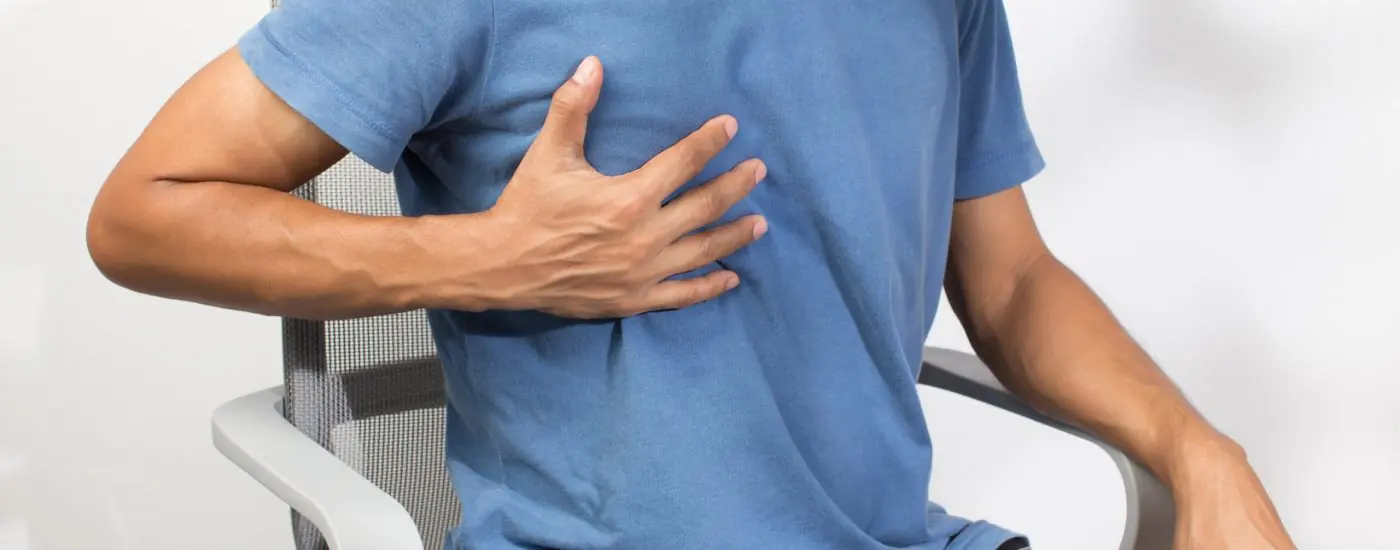
You turn to fasten the seatbelt in the car and a sharp pain cuts the movement short. It happens again when you cough, sneeze or take a deep breath. Pain between the ribs is very common, and it almost always brings the same question: is it muscular, or should I be worried?
This article is not meant to diagnose you from home. It is meant to put in order what to look at first, what an osteopath can review afterwards and when it makes sense for them to do so.
When pain between the ribs needs medical attention first
New pain in the chest or ribs, or pain you cannot explain, should be assessed by a doctor first. That is the rule we follow at the clinic, before any manual therapy.
Seek urgent care, by calling 112 or going to the emergency department, if any of the following happens:
- The pain is intense or appears suddenly.
- You feel tightness in the chest or are short of breath.
- The pain spreads to the arm, neck or jaw.
- There is dizziness, cold sweats, fever or you cough up blood.
- The pain came after a hard knock or fall.
If none of that applies but the pain lasts more than a few days, gets worse or wakes you at night, book an appointment with your doctor without waiting.
Thinking about these possibilities is uncomfortable, but it is the sensible thing to do. Once your doctor has assessed your case and there is no cause for alarm, then it makes sense to look at a mechanical origin.
Why not all rib pain is a muscular blockage
If it hurts when you turn or breathe deeply, it is easy to think of a muscle. Sometimes it is. But the fact that the pain changes with movement only points in a direction. It does not confirm anything.
Among the most common mechanical causes are these:
- Overload of the muscles between the ribs, for example after intense coughing or exertion.
- The joints where the ribs connect to the spine.
- The cartilage joining them to the breastbone. When it becomes inflamed it is called costochondritis.
In these cases the pain usually increases when you twist your trunk, cough or breathe deeply. Sometimes it is reproduced by pressing on a specific spot.
But pain in this area can also come from the lungs, the digestive system or the heart. That is why it cannot be worked out from how it feels. It takes a medical assessment and, at times, some tests.
What an osteopath reviews once significant causes have been ruled out
Once your doctor has assessed the case, the first osteopathy session starts by listening to you.
We ask when the pain began, what triggers it and what eases it. Whether there was a recent cough, a cold, an effort, a knock or a fall. What sport you do, what your job is like and how many hours you spend sitting.
And what you have already been told in consultation, along with any reports or tests you have. That background helps us decide whether to go ahead or whether you should go back to your doctor.
Then we examine. We look at the mobility of the upper back and the rib cage. We observe how the ribs move as you breathe and compare one side with the other.
We review the shoulders and shoulder blades, because they work alongside the ribs. We check whether any movement, or pressure on a particular point, reproduces your pain.
With that information we decide whether there is a mechanical origin worth working on. Sometimes the most sensible thing is to wait, repeat the assessment or refer you on.
Osteopathy as an option that is justified case by case
Manual therapy is not the automatic answer to pain between the ribs. It is proposed when the examination points to a mechanical origin and makes sense for that person, at that moment.
When it does, what we aim for is specific. Improving the mobility of the upper back and rib cage. Reducing tension in the tissues around the ribs. Making it more comfortable to move and breathe. It can include gentle mobilisation techniques and soft tissue work.
We choose the technique according to how irritated the area is. In very acute pain, it is sometimes prudent to wait a few days.
There is something we do not do: attribute to osteopathy effects on heart or lung disease. We do not treat those conditions. If during the assessment something does not fit with a mechanical origin, we tell you and recommend that you go back to your doctor.
And we review the results. After one or two sessions we look at whether anything has changed. If not, we rethink the approach rather than insisting.
Movement and recommendations according to the diagnosis and how it evolves
Many people stop moving for fear of pain. It is understandable, but it rarely helps. What we recommend depends on your diagnosis and how it evolves.
When the origin is mechanical and clear, these guidelines tend to work:
- Gentle movements of the upper back, without chasing the pain.
- Calm, deep breathing, within what does not hurt.
- A gradual return to activity, starting with less than you think you can do.
- Resting a hand or a cushion over the area when you cough, if it eases things.
What we avoid is forcing breaths or stretches until they hurt, and going straight back to intense training.
We review how it evolves with you. If the pain improves, we build up little by little. If it stays, gets worse or something new appears, we stop and go back to the medical consultation. That decision is part of the plan from the start.
Osteopathic assessment at Fisio Physio Clinic Salinas
At Fisio Physio Clinic Salinas, osteopathy is part of a team where the osteopath and the physiotherapist share what they find. So if your case also needs exercise or mobility work, the plan is coherent from start to finish.
The first session lasts more than an hour. We take your history, carry out the examination and, with what we find, explain what makes sense to do and what does not. If your doctor has not yet seen you for this pain, we will ask you to go before we continue.
If you have pain between the ribs that your doctor has already assessed and you want to know whether osteopathy could help, book an appointment and we will look at it together. First what matters most, then the mechanical origin, and only then the therapy.